
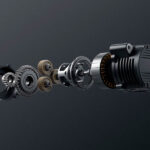

What’s Dry Electrode, and Why Should Riders Care?
The result? A 25% reduction in energy consumption and 5% lower production costs, with better uniformity and durability in the cells. For e-moto manufacturers who live on razor-thin margins, that 5% cost savings is massive. It means a Surron Ultra Bee could drop by hundreds of dollars without sacrificing range. Or conversely, manufacturers could pack more capacity into the same price bracket.
Dragonfly’s process works with both LiFePO4 (safe, long-lasting) and NMC (high energy density, more range) chemistries. That flexibility matters for the e-moto world — commuter bikes benefit from the longevity of LiFePO4, while performance-oriented electric dirt bikes and hyper-naked street bikes need the density of NMC.
Vertical Integration: The Asian Advantage Comes Stateside
One of the most interesting parts of Dragonfly’s approach is how they’re integrating cell prototyping, pack design, and real-world field data into a single feedback loop. The company notes that this kind of vertical integration is “rare outside of large-scale manufacturers in Asia.”
For the e-moto industry, that’s significant. Right now, most smaller electric motorcycle brands buy cells from whoever’s cheapest — CATL, BYD, Samsung SDI — and build packs around them. A domestic supplier that offers end-to-end development could mean better-optimized battery packs for mid-size e-moto makers who can’t afford to develop their own cell chemistry.
From Trucking to Trail Riding
Dragonfly isn’t just focused on cars. They’re already supplying all-electric auxiliary power units for the trucking industry — things like liftgate power and cabin HVAC without idling a diesel engine. That same rugged, vibration-resistant battery tech translates directly to off-road e-motos that get bounced around on single-track trails.
The company is also a key member of the Nevada Tech Hub, a statewide initiative building a “Lithium Loop” — extraction, processing, manufacturing, and recycling all in one region. Nevada is already home to the Lithium Loop concept, and having battery production closer to home means fewer supply chain headaches for US-based e-moto brands.
The Takeaway
When you’re shopping for an electric motorcycle or e-bike in the next couple of years, you won’t see “dry electrode” on the spec sheet. But you’ll feel it — in the price, the range, and the longevity of the battery. Innovations like Dragonfly’s dry electrode process are the kind of infrastructure-level improvements that don’t make sexy headlines but deliver exactly what riders have been asking for: better performance at a lower cost.
The EV battery ecosystem is growing despite the political noise. And for anyone on two wheels, that’s a very good thing.
— Based on reporting by CleanTechnica. Read the original article here.