

The “holy grail” of battery tech has been hovering on the horizon for years like a desert mirage — always coming, never quite here. But this week, a California e-bike brand just proved it’s closer than we thought.
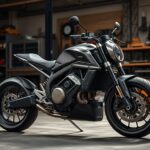
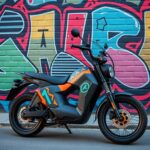
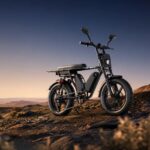
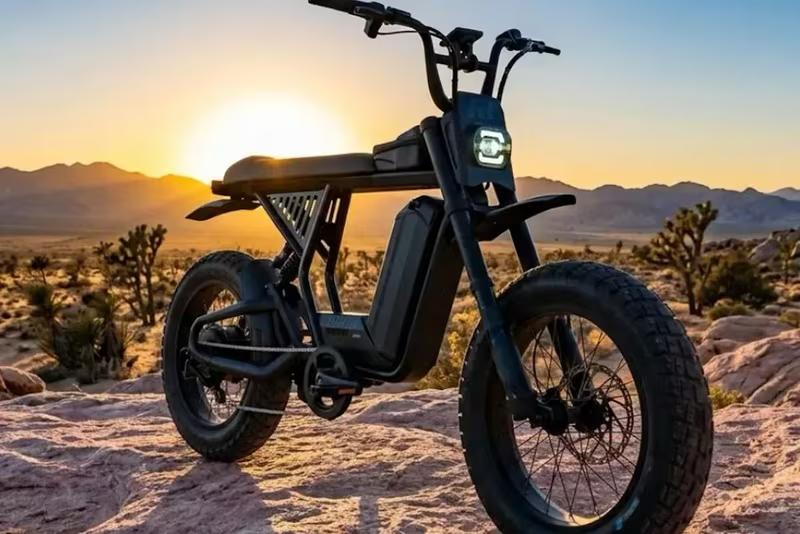
Ride1Up dropped a surprise with the Revv1 EVO, and while it looks like another moped-style electric bike at first glance, what’s under the “tank” changes the conversation entirely: a semi-solid-state battery that could make lithium-ion feel like yesterday’s news.
What Makes Semi-Solid-State Different
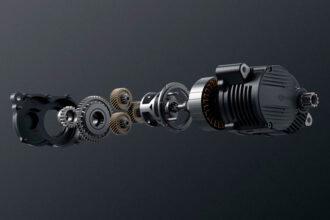
Here’s the simplified version. Traditional lithium-ion batteries use a liquid electrolyte that’s flammable, degrades over time, and hates cold weather. Semi-solid-state replaces that liquid with a gel electrolyte — think of it as the difference between a water balloon and a gummy bear. The gel is more stable, less prone to catastrophic failure, and handles temperature swings way better.
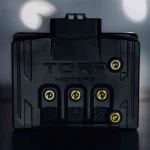
Ride1Up claims the Revv1 EVO’s 52V, 1,040 Wh pack can survive over 1,200 charge cycles — roughly double what current lithium-ion batteries manage. At 2,000 full charges, you’re looking at a battery that could outlive the bike itself. And with the included 9A fast charger, you can go from empty to full in about 2 hours. Compare that to the 6+ hours most e-bike owners are used to, and it starts looking like a generational leap.
Cold Weather? No Problem
If you ride in winter, you know the pain. Lithium batteries lose capacity in the cold, sometimes dropping 30-40% below freezing. Ride1Up says the EVO’s pack retains 70% of its capacity at -4°F. That’s not just impressive — it’s game-changing for anyone who wants year-round riding in northern climates. Suddenly, that “seasonal e-bike” in the garage becomes a legitimate daily commuter through January.
Safety That Actually Matters
The liquid electrolyte in current lithium batteries is what makes them go into thermal runaway when damaged. We’ve all seen the videos of e-bike batteries catching fire. Ride1Up claims the EVO’s battery passed puncture, crush, thermal, and short-circuit tests without incident. If that holds up in real-world use, it’s a massive step forward for basement charging and apartment dwellers.
The Trade-Off: Less Motor, More Practicality
Here’s the interesting bit. Previous Revv1 models packed a 1,000W nominal motor. The EVO drops to 750W. Before you call it a downgrade, consider the peak output: 2,080W with 100 Nm of torque. That’s still enough to haul a 400 lb payload and hit 30+ mph in off-road mode. The real reason? Ride1Up seems to be positioning this bike to stay comfortably within evolving state regulations — a smart move as lawmakers start cracking down on high-powered e-bikes.
With 160mm of front travel from a dual-crown fork and 90mm of rear squish, the EVO still looks like a proper ripper. Four-piston brakes, integrated turn signals, and 20×4″ Vee Huntsman tires round out a package that’s more “polished commuter” than “lawyer-bait loophole machine.”
What This Means for E-Moto Riders
Semi-solid-state batteries aren’t just an e-bike story. The same technology that makes the Revv1 EVO safer and more durable is directly applicable to full-size electric motorcycles. If battery makers can scale this chemistry to the 8-15 kWh packs that e-motos need, it solves two of the biggest complaints riders have: range anxiety from degraded packs and fire risk from crashes.
Ride1Up has beaten industry giant Giant to market with semi-solid-state, starting pre-orders at $2,395 for August delivery. That’s aggressive pricing for next-gen battery tech. If the real-world performance matches the lab claims, expect every major e-bike and e-moto brand to follow suit within 18 months.
The Bottom Line
The Revv1 EVO might be a moped-style e-bike, but its battery represents a paradigm shift. Solid-state has been the industry’s favorite buzzword for a decade. Seeing it actually ship — even in semi form — at consumer-level pricing is the kind of news that makes the future feel like it’s finally arrived. If you’ve been sitting on the fence about electric two-wheelers, the gear is getting better. The question is whether you’ll still be waiting when genuine solid-state hits the streets.
Article based on reporting from Electric Bike Report’s Weekly Recharge, Episode 82.