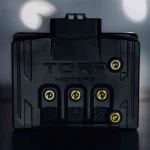


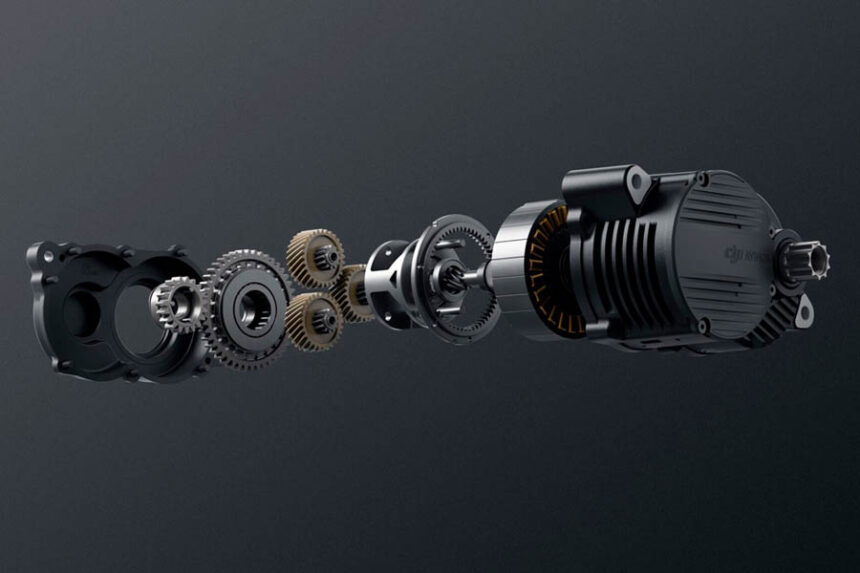
Here’s a question that’s getting harder to answer every month: at what point does an electric bicycle stop being a bicycle and start being a motorcycle? The latest flashpoint in that debate comes from Avinox, whose new M2S mid-drive motor cranks out a staggering 1,500 watts of peak power and 150 Nm of torque. Those numbers don’t just compete with mid-range e-motos — they outright exceed what some light electric motorcycles put down.
The controversy isn’t theoretical. Mountain Bike Hall of Famer Hans Rey, who rides for Bosch and Santa Cruz, recently went public urging the industry to cap e-bike power. “In order to protect what we have, we must stop asking how much power we can get away with,” Rey told BikeRadar. Peter Eland of the UK’s Bicycle Association echoed the sentiment, warning that peak power ratings can far exceed the 250W continuous limit that most regulations are built around.
Avinox’s response is worth reading closely. The company argues that power and speed are fundamentally different things, and that speed — not power — is what determines rider safety. Their M2S motor is designed to help riders muscle through technical climbs, clear rocky ledges, and maintain momentum on steep ascents, not to blast down fire roads at illegal speeds. “Power is the force that helps riders accelerate, especially at low speeds and in demanding situations,” Avinox stated, adding that their system complies fully with all applicable speed regulations.
The company also makes a case for accessibility. High-torque motors can enable heavier riders, people with disabilities, and cargo-haulers to ride when conventional limits would leave them stranded. Arbitrary power caps, Avinox argues, risk excluding the very riders who benefit most from electric assist.
Where the E-Moto World Comes In
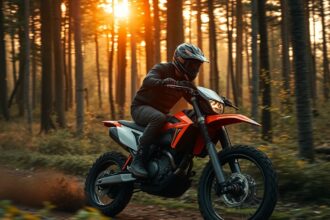
This debate matters far beyond pedal-assist purists. The e-moto and Surron-style market lives in the regulatory gray zone that opens up when power output exceeds traditional bicycle norms. If a 1,500W e-bike motor is legal for bike lanes and multi-use paths, what’s the argument against an 8kW Surron or a 12kW Stark? The line has always been fuzzy, and Avinox’s M2S doesn’t clarify it — it pushes deeper into the fog.
What’s interesting is that Avinox’s logic actually mirrors what e-moto advocates have been saying for years: regulate by class of use and speed, not by raw power output. A 12kW electric dirt bike used on private land with appropriate safety gear is a very different proposition from a 1,500W commuter e-bike sharing a bike lane with kids on pedal bikes. Power limits are a blunt instrument.
What Riders Should Watch
If you ride anything from a pedal-assist commuter to a full-face-helmet e-moto, this debate matters to you. Regulators in Hawaii, California, Ontario, and beyond are actively drafting laws that define e-bikes by wattage. If those laws use Avinox-level motors as the bogeyman, the cap could end up lower than what current e-moto-adjacent bikes like the Ride1Up Revv1 or Juiced Scrambler deliver.
On the flip side, if Avinox succeeds in shifting the conversation toward speed-based regulation, it could create a regulatory framework that accommodates everything from a 250W city bike to a trail-worthy e-moto — as long as speed limits and use-case rules are clear.
For now, the M2S is shipping and Avinox is standing its ground. The real test won’t come from industry debate — it’ll come the first time a rider on an 1,500W e-bike blows past a skeptical police officer. How that interaction plays out might shape regulations for the entire segment.
This article was adapted from coverage by Electric Bike Report’s The Weekly Recharge Episode 84.